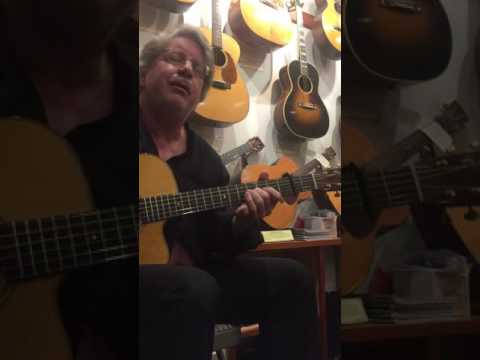
Question 1
"If there is such a thing as Celtic Guitar, how would you define it?"
I am not sure there is anything to the label.
That said, there exists a distinctive strain of fingerstyle guitar, developed more than thirty years ago, which came to define how solo guitar players approached Celtic music, including myself. I began playing this way in the late-1970s.
The "style" is essentially melodic: the fingers of both hands play ornamented melodies, while the thumb produces drones and moving bass lines. Most notes are produced with the left hand, as hammer-ons or pull-offs, and full or block chords are relatively rare. Irregular tunings are common, dropped-D being about as close to regular as one ever finds.
The origins of this style are European. In the late-1960s, English guitarists, including Martin Carthy, Davey Graham, and John Renbourne, began experimenting with new techniques and tunings to play dance tunes, music from the Renaissance, and to accompany traditional singing. Then came the first two recordings of the French guitarist, Pierre Bensusan. Bensusan gave the music its characteristic lilt, and mix of drive and laciness.
The bridge between Europe and the United States was a friend of Pierre's, and my favorite guitar player, Eric Schoenberg. Eric, whom everyone knows as a pioneer of ragtime guitar and as a guitar maker, plays a dozen or so Celtic tunes in the style, all of which are gems. In the 1970s, Eric recorded some of these on his two Rounder albums. His Kid on the Mountain and Green Fields of Canada are perfect exemplars of the style.
There are two problems with labelling this style, Celtic Guitar. First, the guitar has been part of Celtic music for a very long time, and it has been used for various purposes, primarily rhythmic. Second, the style I have just described can be used to play other forms of music. My CD includes an Israeli dance tune, and Bensusan's first recordings contained more French than Irish music.
Question 2
"What is it about your arrangements or delivery that can properly be called Celtic?"
Nothing.
I have learned, from the reactions of people who listen to me play, that there is something unique about my touch and tone. I suspect that my touch simply fits Celtic music well, or, that it developed through playing Celtic music.
Question 3
"About your alternate tunings. On Carolan's Concerto, your DADGAD seems perfectly suited to the tune, yet doesn't scream 'DADGAD!' the way so many DADGAD arrangements do. How'd you do that?"
Open and modal tunings have a downside: their intrinsic characteristics tend to infuse the music with a particular and obvious sound (tonality plus licks that become clichés). The trick is to find ways to let the music govern the guitar playing, not the other way around. One way to deal with DADGAD is to deemphasize the harp sound — made naturally as the strings (especially the G and A) vibrate against one another — and then to play melody based figures, with both hands, on single strings. I play this way when I play dance music and when I clawhammer, and Bensusan made an obsession out of it because, I suspect, he came to dislike or distrust the prepackaged "beauty" of DADGAD.
My CD, Memory and Praise, however, only has one Irish dance tune, a bagpipe piece, the Choice Wife, which is also in DADGAD. Most of the CD is harp music, and Carolan's compositions are more like little chamber music than they are like Irish dance music. Carolan is more harmonically-defined, more stately, but less craggy and ornamented. These differences matter.
On FGDGCD tuning: Here's a subversive bit of deconstruction for you, which I mean to be taken seriously: the Celtic Guitar style I have described is clawhammer banjo without the right hand (without the "claw"). The left hand plays most of the notes, which is only possible in special tunings, and a steady drone is maintained. The answer is found in Old Time banjo. FGDGCD is a 6-string variation on the 5-string banjo tuning GDGCD, called Mountain Modal or Mountain Minor. It is perfectly adapted to modal tunes that move back and forth from the I chord to the VII chord. Pierre Bensusan used DGDGCD and FGDGCD on his first record, and I use both tunings regularly. DADGAD, by the way, is simply Mountain Modal transposed to the key of D, and banjo players used it long before guitar players did.
Question 4
"How do you decide what to play and how to approach it on the guitar?"
I learn tunes that stick in my head, after they've bothered me for awhile. It's just another version of falling in love. I learn the tune so that I can be with it in my own private way ... that's all.
With the exception of the clawhammer guitar medleys, all of the pieces on Memory and Praise developed in the same way. I start with melody, then gradually add the bass and middle voices. The process can take months and even years. I am in no hurry; I have my whole life to build a relationship with a tune. In any case, I never codify an arrangement. Since I strive for simplicity, there is lots of room for the piece to grow and change, over time. Although I read music, I learn by ear, and don't write my arrangements down.
Where possible, I also add mid-range voices (moving lines between the bass and the melody). Eric Schoenberg was the first to really exploit the potential of these. At their most elaborate, they are counterpoint. At their most primitive, they function like regulators do on the pipes, giving color to the drone.
Question 5
"You pull from the different traditions of Irish harp literature, dance tunes, pipe tunes, and Gaelic song. Are there any differences in the way you absorb and internalize music from these different traditions?"
No.
I simply play tunes that I have fallen in love with, and I don't worry too much about the specifics of local traditions. That said, by the time I start playing a tune, I usually feel quite immersed in it, and I am fully aware of how other people have played it. Moreover, my own tastes in listening to Celtic music are puritanical and luddite: I prefer the most traditional instruments, played solo or at most in twos, without rhythmic or harmonic accompaniment, in older styles ... and I hate electrified Celtic music.
Question 6
"You clearly love the sound of the guitar."
I wonder ... I virtually never listen to solo acoustic guitar (exceptions include people like Gary Davis and Joseph Spence, whose playing is all but unique to them). I only arrange music that I hear played on other instruments, or that I learn from people who play them on other instruments.
Question 7
"Do you spend more time looking for peppy tunes that you can slow down or wandering the under-explored hallways of Irish harp literature?"
The music I care about is structured by the space around the notes, and not just by the notes themselves. I want my playing to capture the silences in a melody, the way the decay of one note or phrase colors what comes next, and the way the box of the guitar itself creates space and color. I play guitar for myself, preferably alone, preferably late at night, and I listen closely to the way the music interacts with the strings and the wood. I play the way I do because I listen to what I play.
I spend no time looking for tunes at all; but I listen to music all the time, and listening determines what and how I play.
I never self-consciously slow tunes. I distrust "peppy" or jaunty tunes, like hornpipes; I'm drawn to the melancholy, not the melodrama, in music.
Question 8
"Ducks on a Pond and Shady Grove are played with a distinctive frailing technique. Only you and Jody Stecher have recorded guitar frailing tracks where the thumb hits the anticipation note rather than the downbeat. What would you tell interested students about your clawhammer style?"
Let me back you up just a bit. I play clawhammer guitar, a style I have adapted from clawhammer banjo — I don't "frail."
There are five characteristics of the way I play clawhammer. First, every specific note played by the right hand is produced either by the index finger or the thumb. Second, no note is ever plucked; each is played either with the thumb, or by striking down on a string with the nail of the index finger. Third, the index finger never plays off the beat, and the thumb never plays on the beat — this gives the music a heavier, more natural drive. Fourth, for any piece, most of the notes are produced by the left hand, in combinations of slides, hammers, and pull-offs. Fifth, I play in multiple tunings, and sometimes replace the sixth string bass with a high sixth string treble to imitate the fifth string of the banjo.
To play clawhammer guitar, you probably have to play some clawhammer banjo, at least at first. As important, you have to listen to clawhammer banjo, all the time. Great, relatively pure clawhammer players whose recordings are readily available include Wade Ward, Fred Cockerham, and Tommy Jarrell. My favorite living players (who make records) are Bob Carlin, Dirk Powell, Jody Stecher, and Walt Koken — Koken is so good, he occupies his own dimension.
If you try to play in this style, you'll need patience and a willingness to experiment, sometimes with little hope of achieving much in the short run. There are no easy shortcuts. It has taken me years to make the style work on the guitar, and I am still learning. I do it because I fell in love with Old Time fiddle music. The point is that Old Time fiddle music, like Celtic music, has a life of its own, outside of the guitar; the music should shape the guitar playing as far as is possible, not vice-versa.
Jody's lovely, virtuoso, Red Rocking Chair is the first and only clawhammer guitar piece I have ever heard, other than my own. I don't know if anyone else is trying to play clawhammer guitar.
Question 9
"Which of your arrangements are you most proud of?"
In clawhammer guitar style, I play Tommy Jarrell's Joke on the Puppy (from the fiddle), his Tumblin' Gap (from the banjo), and some Kentucky tunes that define, for me at this point, what I can do with Old Time music on the guitar. In the Celtic guitar style, I am probably most satisfied — or is it just relief? — with The Farewell to Music and Mabel O'Kelly, two Carolan pieces on the CD. Both are such improbable tunes; and both took years to work up, with many starts and stops. On the CD, Squire Wood's Lamentation seems to me to be the most pristine of the arrangements, and the Ducks on the Pond medley captures the range of clawhammer sounds, while keeping the lace and lilt — banjos can't do that.
Closing Remarks
"If there's anything I've missed, please don't hesitate to add comment."
I plan to record an all-clawhammer guitar CD next year [it came out — Tumblin' Gap — in 2005]. I know from radio playlists and communications I receive that the two clawhammer medleys have generated lots of attention. Most of the CD will be Old Time fiddle and banjo tunes, most of which will have Celtic roots. But I will also include other music. I am experimenting with using clawhammer techniques to play Celtic music, fiddle tunes from Sweden, and Gypsy songs from Eastern Europe.